Well-Being Tools for Organizations

Evidence-Informed Tools for Strategizing, Measuring, Assessing, and Improving Well-Being

Tools to Frame, Measure, and Assess Well-Being

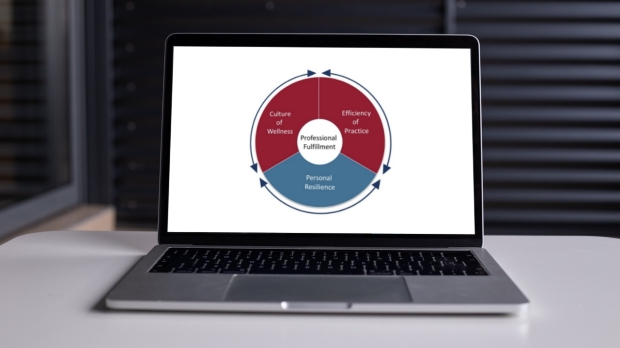
Framework for Well-Being: Stanford Model of Occupational Well-beingTM

The premise that promoting professional fulfillment and mitigating burnout requires organization-wide change is foundational to the work of the Stanford Medicine WellMD & WellPhD Center. The Stanford Model of Occupational Well-beingTM, formerly known as the Stanford Model of Professional Fulfillment, illustrates that framework, showing that well-being is driven by multiple factors. 

Measure Well-Being: Professional Fulfillment Index (PFI)

The PFI is a tool that assesses physician well-being by measuring both burnout and professional fulfillment. The PFI is designed to be sensitive to changes that may occur due to various factors that impact professional fulfillment. This comprehensive measurement approach offers dynamic insights, enabling us to create targeted interventions that help improve the drivers of professional fulfillment among physicians and scientists. 

Assess Well-Being Progress: Stanford Doctor and Scientist Surveys

The Stanford Doctor SurveyTM and Stanford Scientist SurveyTM both serve to track occupational well-being longitudinally and are key parts of the WellMD & WellPhD Center’s strategy to improve upon the key components of the Stanford Model for Occupational Well-BeingTM

Tools and Insights for Well-Being Improvement

Our Approach to Enhancing Well-Being

An effective well-being strategy relies on collaboration and understanding the systemic drivers of burnout and fulfillment; individual efforts matter, but must be supported by organizational change. The Center empowers system- and local-level leaders to address systemic issues through holistic assessments that uncover unique challenges and opportunities. 

Equip Leaders With the Skills to Catalyze Well-Being Change

As leaders in the field of clinician well-being, through research and the application of our findings to real-world challenges, the Center is uniquely positioned to equip leaders to catalyze change within their organizations. Our educational offerings empower healthcare leaders to create an organizational culture and practice environment that fosters meaning, purpose, and fulfillment for clinicians, improving clinical outcomes to benefit organizations and the communities they serve.  

Foster Connection and Collegiality With Commensality Groups

Through facilitated small-group discussion, commensality groups have been shown to increase the sense of connection and collegiality among physicians and build camaraderie and meaning in work. This simple yet powerful evidence-based approach has been shown to improve professional fulfillment and reduce burnout in randomized trials with physicians.